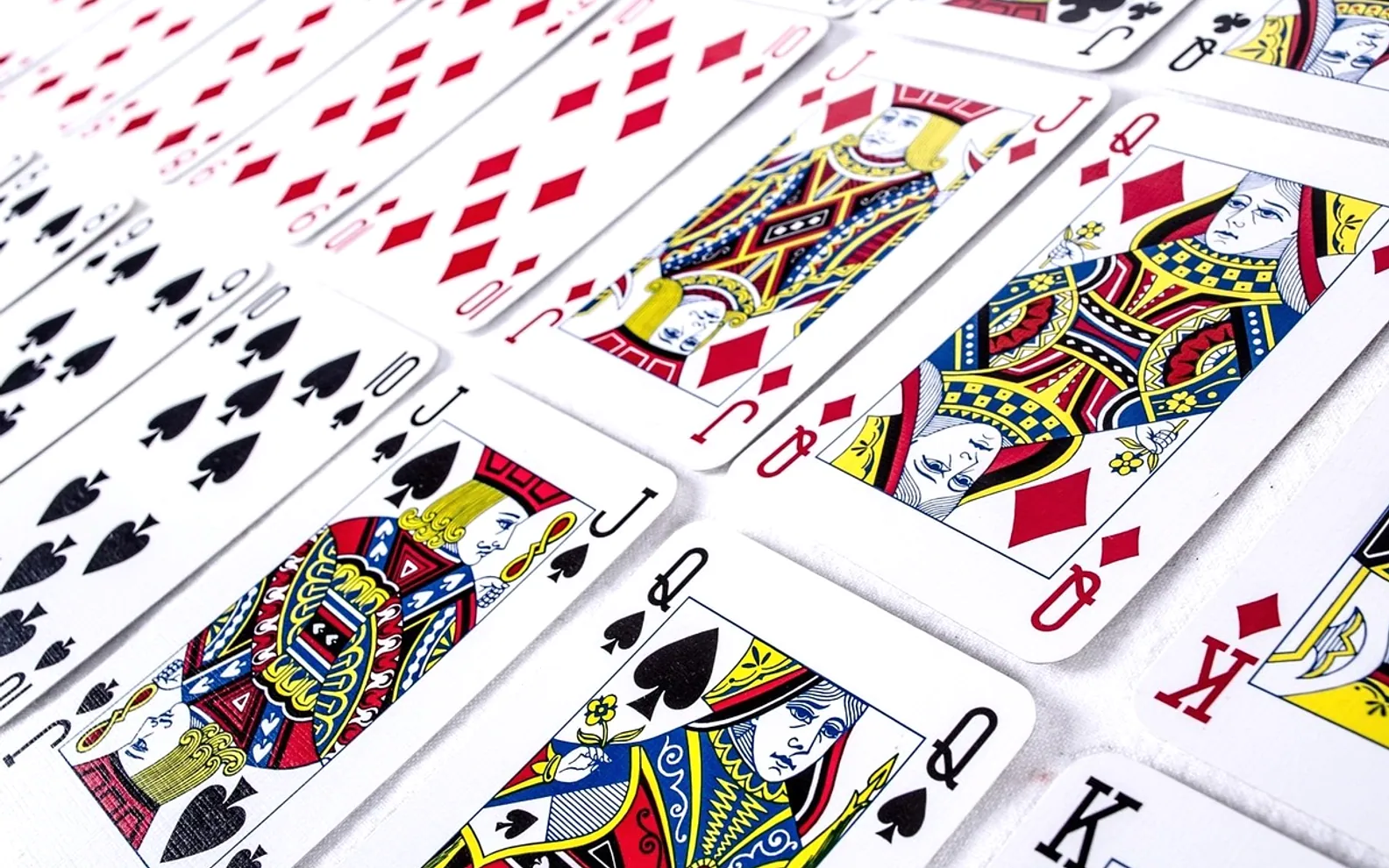
Three Card Poker is one of the quickest table games in any casino lobby. Each round takes well under a minute, there is only one real decision to make, and the hands are small enough to read at a glance. That speed is part of its appeal, and also the reason it pays to understand the rules before the first chip goes down. This guide covers the main game, the side bet most tables offer and the details that change from one table to the next.
The table and the two ways to play
The layout normally has three betting circles in front of each seat: Ante, Play and Pair Plus. In effect these are two separate games sharing one deal.
- Ante and Play is the head-to-head game against the dealer.
- Pair Plus is a bet on your own three cards only. The dealer's hand does not matter to it at all.
Most tables let you place the Ante, the Pair Plus or both. Online versions and live-dealer studios use the same structure, usually with an on-screen panel showing the paytable.
How a round of Ante and Play unfolds
- You place an Ante bet within the table limits.
- You and the dealer each receive three cards. Yours are face up or shown on screen; the dealer's stay hidden.
- You look at your hand and choose: fold and give up the Ante, or play by placing a Play bet equal to the Ante.
- The dealer reveals their cards and checks whether the hand qualifies, which on standard tables means queen-high or better.
- The hands are settled.
Settling the main bets
| Situation | Ante | Play |
|---|---|---|
| Dealer does not qualify | Paid at even money | Returned as a push |
| Dealer qualifies, your hand is higher | Paid at even money | Paid at even money |
| Dealer qualifies, dealer's hand is higher | Lost | Lost |
| Dealer qualifies, hands tie | Push | Push |
Many tables add an Ante bonus: if your hand is a straight or better, you collect an extra payment on the Ante whether or not the dealer qualifies and even if the dealer's hand beats yours. The size of that bonus is set by the paytable, which differs between casinos and software providers, so read the one at your table rather than assuming.
Why a straight beats a flush here
Players who know five-card poker are often surprised by the ranking order. With only three cards, some hands that are rare in regular poker turn up more often, and the ranking follows how many ways each hand can be dealt. A standard 52-card deck gives 22,100 possible three-card hands:
| Hand | Ways to be dealt |
|---|---|
| Straight flush | 48 |
| Three of a kind | 52 |
| Straight | 720 |
| Flush | 1,096 |
| Pair | 3,744 |
| High card | 16,440 |
A flush can be dealt in more ways than a straight, so the straight ranks higher. Three of a kind is rarer still, and the straight flush tops the table. Aces can usually count high or low in a straight (A-2-3 or Q-K-A), but check the house rules if this matters to your hand.
The one decision: fold or play
Because the only choice is whether to continue, the game rewards a simple, consistent rule rather than gut feeling. The guideline quoted most widely is to play any hand of queen-six-four or better and fold anything weaker. It mirrors the dealer's qualifying threshold and keeps decisions steady from one round to the next.
Following a guideline like this only trims avoidable mistakes. It does not remove the house advantage built into the payouts, and it cannot make a session profitable. Think of it as playing the game correctly, not as a way to beat it.
Pair Plus: a separate bet on your own hand
The Pair Plus bet wins if your three cards make a pair or better, and it loses on high card alone. Payments rise with the strength of the hand, from a pair at the bottom to a straight flush at the top. The dealer can fold, qualify or hold anything at all; it makes no difference to this bet.
That independence makes Pair Plus feel simple, but its paytable is where tables differ most. Two games that look identical on screen can pay quite different amounts for a flush or a straight. If you play the side bet, compare the printed paytable each time, and remember that a side bet adds to the amount at risk per round.
Speed and your budget
A round that lasts seconds means many rounds per hour, and the Ante plus Play plus Pair Plus can add up to three units on the table before the cards are even dealt. Set your stake with that pace in mind, not just the size of a single chip. Our wider look at the casino games we cover explains how game speed and bet size work together.
Three Card Poker is for adults aged 18 and over, and only where it is legal to play. Decide on a fixed amount and a stopping time before you start, and leave when either one is reached.
Quick recap
- Ante and Play is a contest with the dealer; Pair Plus judges only your own hand.
- The dealer needs queen-high or better to qualify.
- Straights outrank flushes because there are fewer ways to deal them.
- Paytables for the Ante bonus and Pair Plus vary, so read them at every table.
Don’t miss these
 Online GamblingThe Factors Driving the Popularity of Online Football Betting Platforms in Vietnam2 min
 Money HabitsNeeds vs Wants: Sorting Spending Into Two Honest Piles4 min
 Card TablesBlackjack Insurance: Why the Side Bet Rarely Adds Up4 min
 Card TablesLet It Ride Poker: Three Bets, Two Chances to Pull Back4 min